ServicesRoof Replacement
Roof Replacement in Lancaster, OH
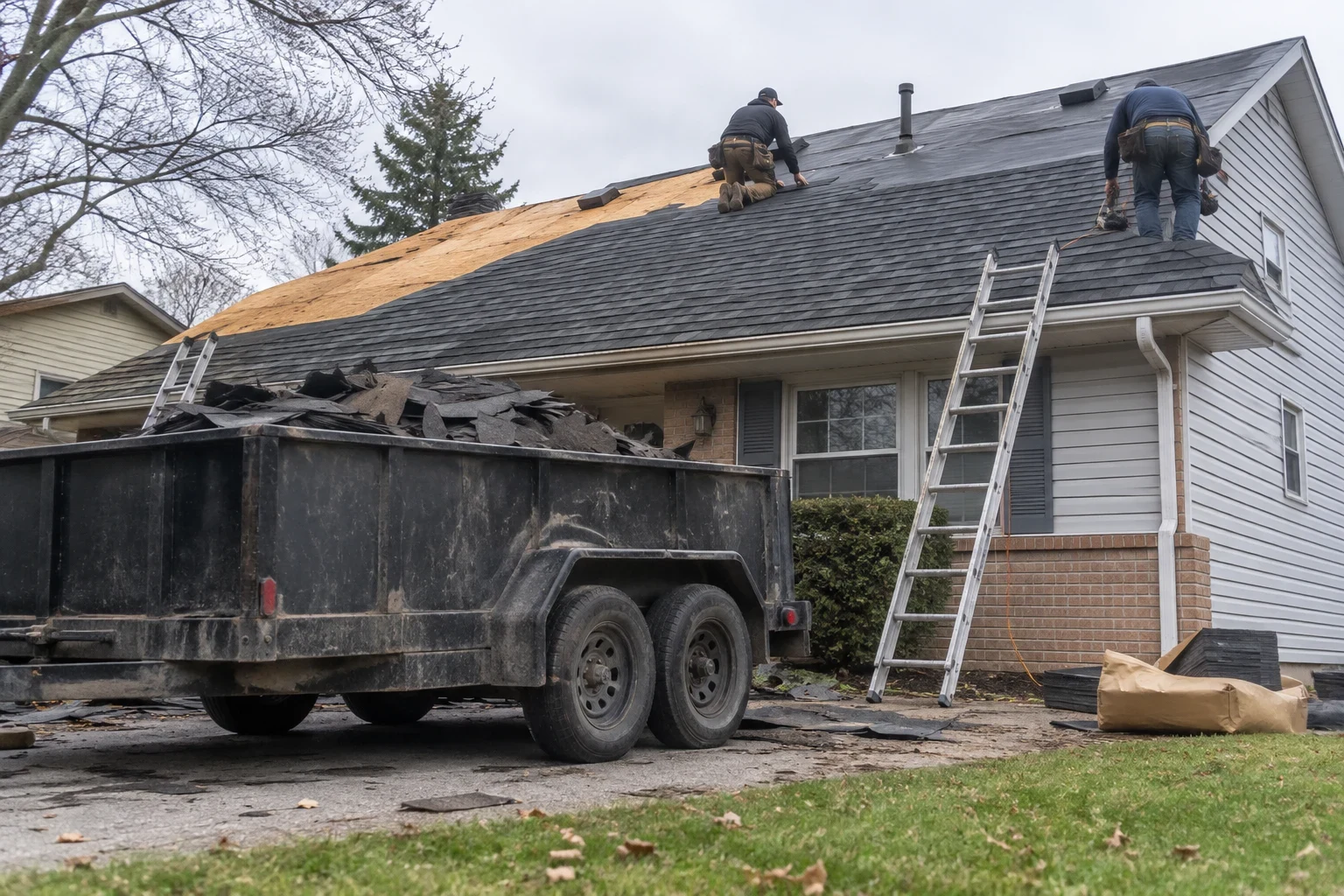
Once patching no longer pays off, we take your old roof down to bare sheathing, replace any damaged boards and build a new roof system from the deck up. Tarps cover your beds, magnets pick up stray nails, and we check with you before changing anything in the plan.
When Replacement Makes More Sense Than Repair
An asphalt shingle ages from the surface inward. UV and summer heat bake the oils out of the asphalt, the ceramic granules break loose and collect in your gutters, and the fiberglass mat goes stiff and brittle. When that wear has spread over most of the slopes, fixing one spot only sends water to the next tired shingle.
Freeze and thaw make it worse in central Ohio. Moisture that slips under a lifted tab turns to ice, expands and opens the seal further every time the temperature swings, while ice dams at the eaves back meltwater under the bottom courses. Replacing the roof gives us the chance to fix those trouble areas all at once with ice and water shield, balanced ventilation and new flashing.
If your shingles have life left in them, we will tell you, and roof repair may be the better choice. You get photos of what we found and a plain explanation, not a push toward a roof you can hold off on.
What Goes Into a Full Replacement
Complete tear-off
We strip the roof down to bare sheathing, removing all shingles and the felt beneath them. Laying new shingles over old ones hides soft wood, adds load to the framing and shortens the life of the new roof, so we don't do it.
Sheathing inspection and repair
With the deck exposed, we walk the entire surface and replace any boards that flex, delaminate or show rot. You get photos and a count of the affected sheets before we swap them.
Membrane and underlayment
Self-adhering ice and water shield goes along the eaves, through the valleys and around pipes and chimneys, the places where meltwater and runoff gather. Synthetic underlayment covers the open field of the roof.
Fresh metal at every edge and wall
New drip edge, step flashing at sidewalls, chimney counterflashing and new pipe boots are part of the job. Old, worn metal left in place is the most common reason a brand-new roof leaks.
Ventilation that moves air
We size soffit intake to match ridge exhaust. Steady airflow keeps the attic cooler in summer and drier in winter, and it keeps heat from cooking the shingles from below.
Daily cleanup
Old material goes down a chute or into the trailer instead of scattering across the yard. At the end of each day, we sweep the lawn, beds and driveway with magnets.
Warning Signs Your Roof Is Due for Replacement
Grit collecting in gutters
Dark, sand-like granules at the downspout outlets mean the shingles are losing their protective surface. Without it, the asphalt breaks down fast in the sun.
Shingles curling or cupping
Lifted edges or sunken centers show the mat has lost its flexibility. Those raised edges catch wind and tear off.
Leaks in several rooms
A single drip usually calls for a repair. Stains appearing in different rooms, or a leak that comes back after it was patched, point to a roof wearing out everywhere.
A dip in the roofline
A low spot between rafters usually signals sheathing that has soaked up water and lost strength. It should be dealt with before winter snow adds weight.
Two layers already in place
Plenty of older homes here already carry a second layer of shingles. Code does not allow a third, so once the top layer fails, a full tear-off is the only route.
How Your Replacement Unfolds
- 1
Measure, check the attic and go over options
We measure every slope, look in the attic for moisture and airflow problems, and talk through shingle and vent choices with you. Your estimate is written out item by item, so the cost of each piece of the job is clear.
- 2
Protect the property first
Tarps go over beds and shrubs, plywood leans against windows close to the work, and the trailer is placed where it will not rut the lawn. We let you know which doors to use and where the crew will be working.
- 3
Strip and dry in by section
We only tear off what we can cover before the day ends. Each section gets its sheathing repairs and underlayment before we open the next, so your home is closed up every night.
- 4
Install and check the details
Shingles, flashing, vents and ridge cap are installed, and then we go over each detail on the roof ourselves. If the city or township requires a permit, we pull it and book the inspection.
- 5
Walk-around together
After one last magnet sweep, we walk the yard with you. You receive photos showing the bare deck, the underlayment and the completed roof.
How Your New Roof Gets Priced
Two similar-sized houses can call for very different roofs, so we only quote after measuring and inspecting yours. The estimate lists each part of the job on its own line. If removing the old shingles uncovers hidden damage, we stop, show it to you and get your okay before adding any work.
- Size and pitch of the roof
- The roof's square footage decides how many bundles, rolls and flashing pieces we buy. Steep slopes need roof jacks and harnesses and slower, careful movement, which raises labor.
- How many old layers
- Every added layer beneath the top shingles means more time for the crew to strip and more weight to haul off for disposal.
- Shape of the decking
- Soft, rotted or separating boards must be replaced before anything new goes down. The count stays unknown until tear-off, so your estimate lists the price per sheet ahead of time.
- Shingles and roof details
- Architectural shingles are priced above three-tab. Each chimney, skylight, valley and dormer needs flashing and extra cutting, and adding ridge vent or more soffit intake also shifts the total.
Roof Replacement Questions
Something not covered here? (740) 536-1549
How many days will the job take?
For most single-family houses, the roof itself takes one to two days. Steep slopes, more than one layer to strip or a large amount of sheathing replacement can stretch that. We give you the expected schedule before we start, and we call if rain or wind moves a day.
Do I need to be there during the work?
No, but we prefer to walk the property with you on the first morning and again at the end. Please leave the driveway open for the trailer and give us access to an outdoor outlet. Nailing shakes the framing a bit, so pull cars out of the garage and take down framed pictures on upper-floor walls.
Is it possible to install the new roof on top of the old shingles?
We don't do layovers. Only a full strip to the sheathing lets us find and replace soft boards, put ice and water shield along the eaves and set new flashing the right way. A second layer also adds weight to the framing and holds heat against the new shingles.
Will my lawn and flower beds get damaged?
Before tear-off, tarps go over your beds and shrubs. Old shingles travel down a chute or go straight into the trailer, so they don't land on the grass. We run magnetic sweepers across the yard each evening and again during the final walk-around.
Is this a good time to deal with my gutters too?
It often is. If your gutters sag, leak at the seams or hold standing water, replacing them right after the roof saves effort because the drip edge and fascia board are already exposed. While we're there, we can look over your gutters, soffit and fascia and tell you plainly whether they need work.
Thinking About a New Roof?
Describe what you have noticed, whether it is grit in the gutters, curled shingles or a stain on the ceiling, and we will pick a day to measure the roof and look in the attic. Before any work begins, you will know the scope, the schedule and how we plan to protect your yard.