ServicesRoof Inspections
Roof Inspections in Lancaster, OH
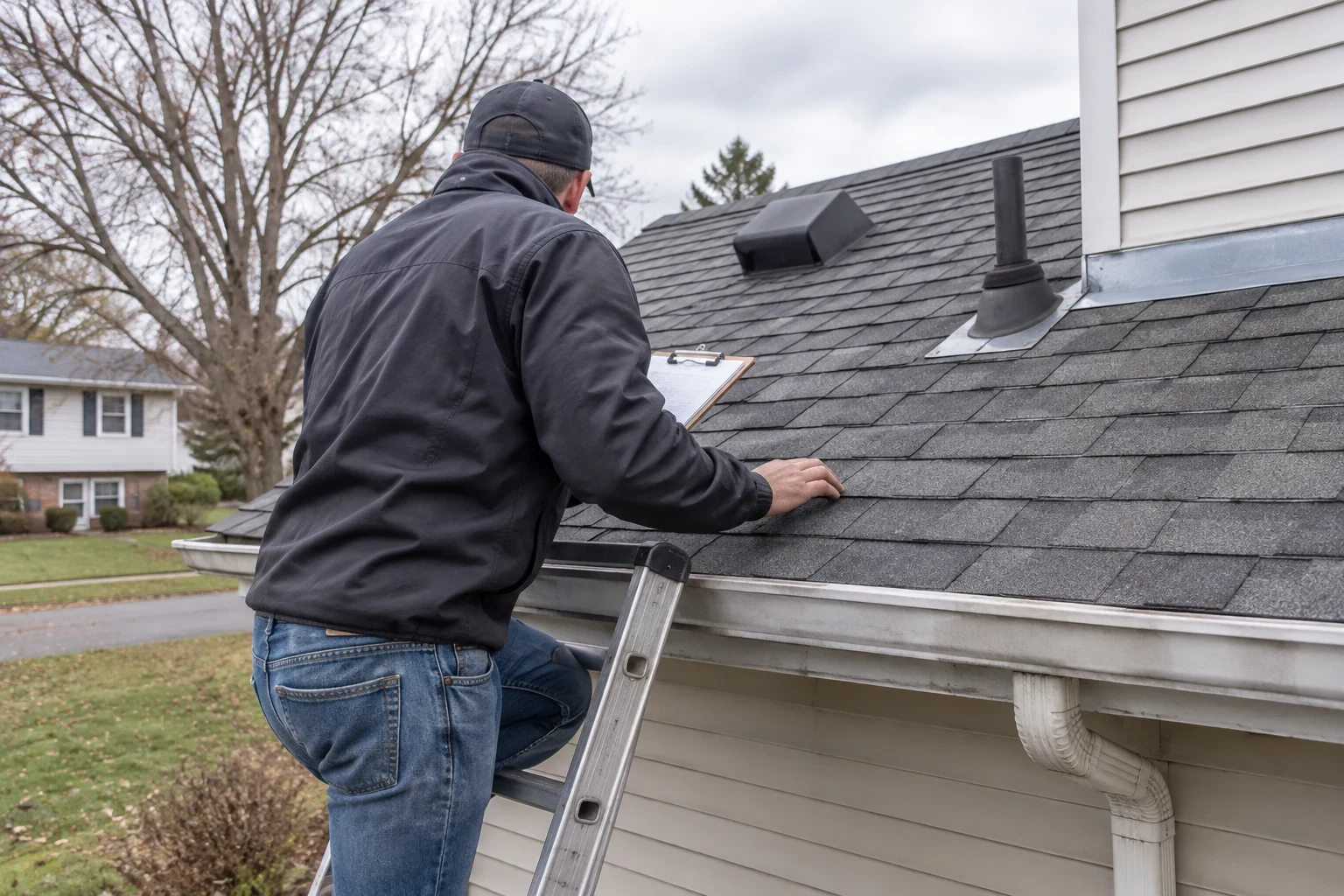
We go over your roof from the eaves up to the ridge, then check its underside from the attic. Each finding gets a photo and a straightforward explanation, so you know which parts are solid, which to keep an eye on and which need attention before water reaches a ceiling.
Why a Roof Inspection Is Worth Doing
Roofs usually wear out piece by piece. One shingle loses its seal and lifts, the rubber collar on a plumbing vent splits, or the step flashing along a sidewall works loose. You cannot spot any of it from the yard, yet each gap lets water onto the decking. Once the decking stays wet, the plywood softens and separates, and nails slowly back out of it.
Catching those spots early keeps the fix small. An inspection makes sense when a house is changing hands, when the roof has passed the midpoint of its expected life, after a rough winter, or when a stain shows up and you want the cause pinned down before paying for a repair.
We keep the visit easy on your household. You hear from us before the ladder goes up, we set it away from planting beds and walkways, and we ask before coming inside to reach the attic.
What Our Inspection Covers
Shingle wear and granule loss
We look for patches where the mineral granules are gone, tabs that curl or cup, and cracked shingles. The granules block UV from reaching the asphalt, and without them the shingle dries out and turns brittle.
Flashing at walls, chimneys and valleys
Leaks tend to begin where the roof meets something else, not in the middle of a slope. We inspect step flashing along walls, counterflashing around the chimney and the valleys for gaps, rust and sealant that has cracked or pulled loose.
Vent boots and other penetrations
The rubber collar around a plumbing vent breaks down after years of sun and freezing, and the crack usually opens on the uphill side where water flows. Exhaust vents, skylight curbs and dish mounts fastened through the shingles get checked too.
Sheathing and attic airflow
Up in the attic we check the roof boards for pinpoints of light at nail holes, dark water marks, frost on the underside and insulation that feels damp. We also compare air coming in at the soffits with air leaving at the ridge, since a poorly vented attic overheats shingles in summer and helps ice dams form in winter.
Gutters, drip edge and fascia
When water spills over or backs up in a gutter, the fascia board and roof edge start to rot. We note sagging sections, loose hangers and soft wood so you know whether gutters or soffit and fascia work should be on your list.
Signs Your Roof Is Due for an Inspection
Stains overhead or damp spots in the attic
A discolored patch on the ceiling tells you water has already made it past the roof. The entry point is often higher up the slope than the stain itself, so we trace the path from inside the attic rather than guess.
Granules collecting at downspouts
Sandy grit in the gutters or on the splash blocks means the shingles are shedding their protective mineral layer sooner than they should.
Heavy ice and icicles along the eaves
A ridge of ice at the roof edge usually points to attic heat melting snow from below. Through a Central Ohio winter that water can pool behind the ice, work under the shingles and wet the decking.
Shingles that are creased or gone
A crease across a tab shows the sealant strip let go and wind flipped it up. Even if the shingle is still attached, it no longer sheds water the way it was designed to.
No records for the roof
If you bought your home without roofing paperwork, or the roof is getting close to twenty years old, an inspection gives you a starting point before anything gives out.
How Inspection Day Runs
- 1
We talk first
We knock, introduce ourselves and ask what you have noticed, from stains to noises in the attic. We also ask where kids, pets and cars will be so the ladder stays clear of them.
- 2
Exterior check with care for the yard
The ladder goes on firm ground with a standoff so it does not crush gutters, and we keep it out of flower beds and off shrubs. On the roof we walk the lower-stress areas and avoid stepping on brittle tabs.
- 3
Attic check with covered shoes
Inside, we wear shoe covers and lay a drop cloth under the attic hatch before opening it. Loose insulation and dust stay on the cloth, not your floor.
- 4
Photos and a plain explanation
Before we leave, we walk you through the photos: what is fine, what to watch and what needs repair. If something needs attention, we explain whether roof repair handles it or whether the roof is closer to roof replacement, and why.
What Moves the Cost of an Inspection
An inspection is priced by the time it takes to do properly: setting the ladder, working across the roof surface and checking the sheathing from the attic. A larger, steeper or more cut-up roof simply needs more of that time. You hear the figure from us on the phone before we book the visit, and it stays the same once we are at your home.
- Roof size and number of planes
- A simple gable with two slopes is quick to cover. Every dormer, hip and valley adds flashing and transitions, and we examine each one separately.
- Pitch and height at the eaves
- Steep or tall roofs need extra safety setup and slower, more careful footing. On the steepest pitches we may inspect from the ladder and the roof edges instead of walking the field.
- Attic access
- A pull-down stair lets us get to the underside of the roof quickly. A small closet hatch, boards laid across the joists or no access point at all slows the interior check and limits how much decking we can see.
- Chimneys, skylights and stacks
- Each opening cut through the roof gets inspected on its own. A roof with a chimney, two skylights and several vent stacks takes longer than one with a lone plumbing vent.
Roof Inspection Questions We Hear Most
Something not covered here? (740) 536-1549
How long does a roof inspection take?
Most houses take about an hour from start to finish. Larger or steeper roofs can take more time. That includes the roof surface, the attic and the walk-through of photos with you at the end, which we always make time for.
Do I need to be home for the visit?
We strongly prefer that someone is there at the start and the finish. The attic check means coming inside, and what you have noticed, like a drip sound or a damp smell, often points us straight to the problem area.
Will you damage the shingles by walking on them?
We step with care and keep off tabs that are cupped or brittle. In deep cold, asphalt shingles stiffen and can crack underfoot, so on those days we rely more on the view from the ladder and what the attic shows.
Is this just a way to sell me a new roof?
No. We recommend roof replacement only when the evidence supports it. Many inspections turn up nothing to fix or a short list of small items, such as a split vent boot or a flashing seam that needs resealing. When a roof is truly worn out, we show you the photos that led us there.
How often should I have my roof inspected?
Every one to two years is sensible for asphalt shingles, moving to every year as the roof ages. Late spring works well because freeze-thaw damage from winter has shown itself and there is plenty of time to make repairs before the next cold season.
Get a Clear Picture of Your Roof
Let us know what made you think about the roof, whether it is a stain, an icicle problem or just its age, and we will pick a visit time that fits your schedule. You come away with photos, an honest explanation and no sales push.