ServicesGutters
Gutter Installation in Lancaster
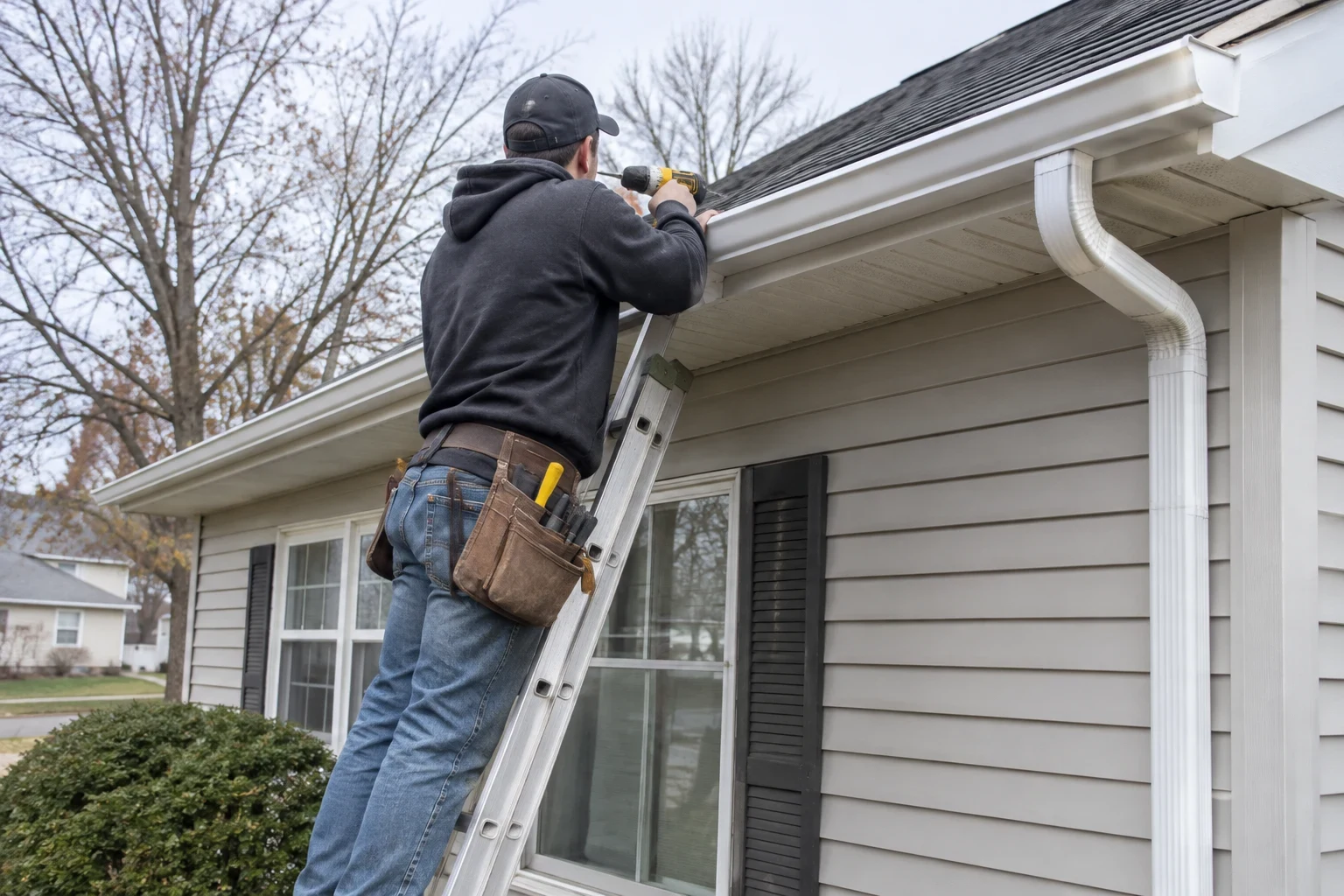
We form continuous aluminum gutters right at your home, fasten them with hidden hangers screwed into sound fascia, and size each downspout to the roof area it drains. Beds and walkways stay covered during the work, and you hear the full plan before a ladder goes up.
Why Gutters Matter More Than They Look
Every rain sends water sliding down the shingles and off the eave. A working gutter system collects it at that edge and routes it to a downspout that releases it well clear of the foundation, the fascia board and the soil around your basement walls. When the troughs are undersized, pitched backward or pulling loose, water lands in precisely the places you want to keep dry.
The problems we see usually come from a short list. On sectional gutters, the seams open up after years of stretching in summer heat and shrinking in the cold. Spike-and-ferrule hangers back out of the fascia a little at a time until the run sags. Or the house simply has too few downspouts, or ones that are too narrow, and a heavy storm overflows the trough at the far ends.
A full replacement is the right call when the system gives you trouble year after year. If the issue is one loose section or a single plugged downspout, we will tell you that directly, and a smaller repair may be all you need.
What Our Gutter Work Includes
- 01
One-piece aluminum runs
A forming machine at your home rolls each gutter from coil stock, cut to the exact length of that roof edge. The only joints fall at the corners, so the mid-run seams where leaks usually begin are gone.
- 02
Hidden hangers on solid wood
Hangers are screwed through the gutter into the fascia, typically every two feet and tighter near downspouts and valleys. Screws keep their grip where old spikes loosen through freeze-thaw cycles.
- 03
Downspouts sized to the roof
We set outlet size and count by the square footage each run carries. A 3x4 downspout moves far more water than a standard 2x3 and is less likely to choke on leaves and shingle grit.
- 04
Fascia check before hanging
With the old gutters down, we probe the fascia for soft spots. Any rotted board is flagged and shown to you, since new gutters fastened into bad wood will pull away. Those repairs run through our soffit and fascia service.
- 05
Haul-off and drainage at grade
The old gutters and hardware leave with us. At the bottom of each downspout we add an extension or splash block that carries the water out and away from the foundation walls.
Questions about Gutters?
Call(740) 536-1549Signs Your Gutters Need Replacing
Water sheets over the front edge
If water spills over the lip in a steady rain, the trough is too small, the pitch is flat or the outlets cannot keep up.
Runs sagging or pulling away
A gap between the gutter back and the fascia means hangers have failed or the wood behind them has softened. Either way, water is now running behind the gutter.
Drips at seams and corners
Sealant in sectional gutters dries and cracks with age. Recaulking buys a season or two, but the joints keep reopening.
Peeling paint or dark streaks on the fascia
Staining behind the gutter is a sign water has been soaking the board, often the first stage of rot.
Damp basement or eroded beds
Soil washed out under a corner or a wet basement wall after rain usually traces back to a short, clogged or missing downspout.
Heavy ice along the eaves
Long icicles and ice packed in the trough during a central Ohio winter point to water sitting in the gutter instead of draining. That standing ice adds weight that bends hangers.
How a Gutter Day Runs
- 1
Walk-around and measurements
We measure every roof edge, note where downspouts can discharge without crossing a walkway, and look at roof pitch and valleys that dump extra water. You hear the plan, including downspout locations, before anything changes.
- 2
Protecting the yard
Drop cloths go over flower beds and shrubs under each run, and ladders get standoffs so they rest on the wall, not on your gutters or shingles. We tell you where the trailer and forming machine will sit so the driveway stays usable.
- 3
Tear-off and fascia review
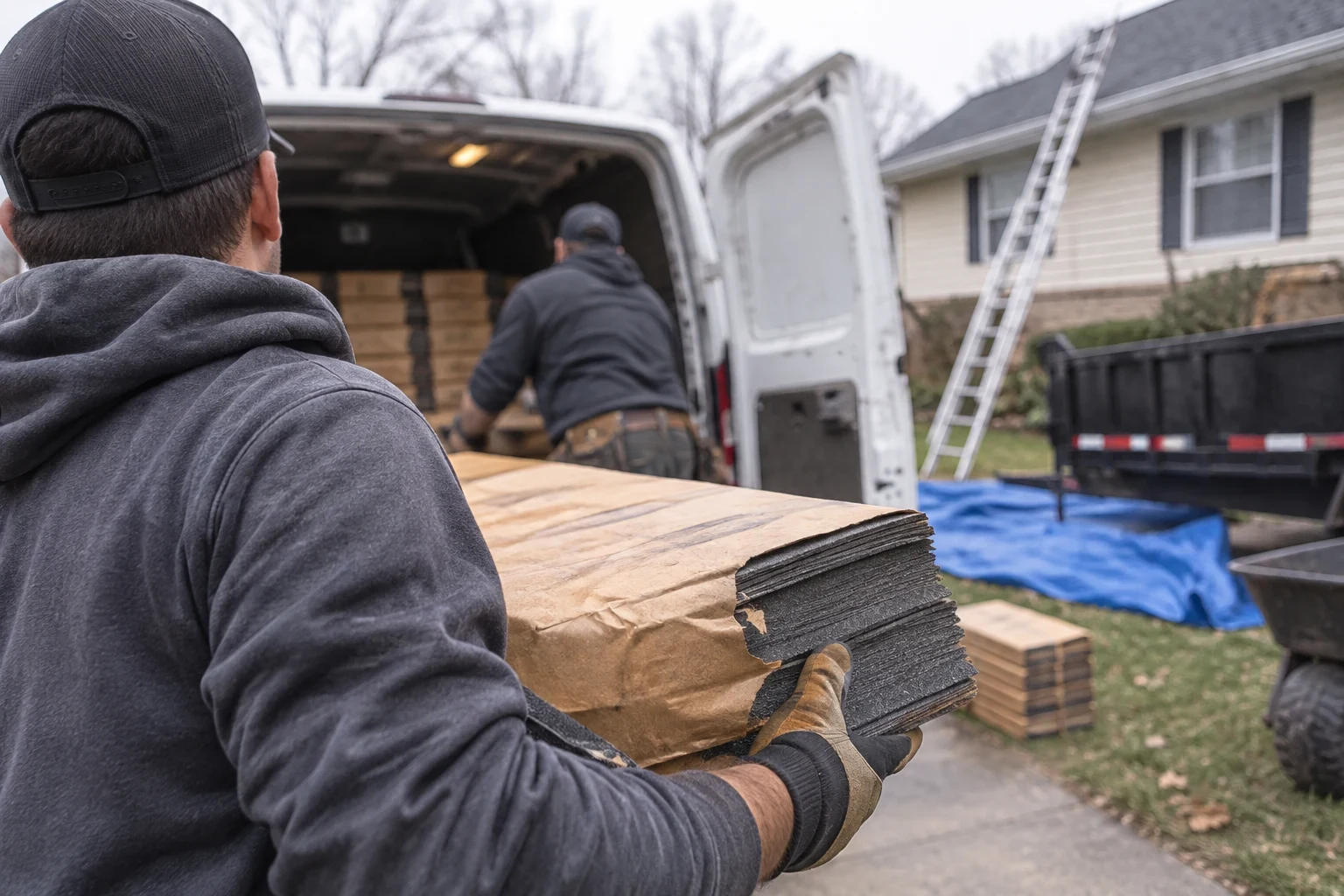
Old gutters come down in pieces and go straight to the trailer. If we find soft fascia, we stop, show you, and explain the options before continuing.
- 4
Forming and hanging
Each run is formed to length, pitched toward its outlet, fitted with mitered corners and sealed end caps, then fastened on hidden hangers.
- 5
Water test and cleanup
We run a hose through every section to confirm flow, pick up cut-offs and sweep the lawn with a magnet for screws and rivets. You get a final walk-around with us before we leave.
What Sets the Cost of a Gutter Job
Two things drive most of a gutter quote: how many feet of roof edge need coverage and how high we have to work. The rest depends on the condition of the fascia we find once the old troughs are off. We measure on site and go over a written, line-by-line breakdown with you, by phone or in person, before any work begins.
- Footage and roof height
- The total length of eave determines how much coil stock and hardware the job uses. Second-story runs, or eaves above a steep roof, take more ladder setup and time than the edge of a single-story ranch.
- Trough width and downspout size
- Moving up to a 6-inch trough, or from the common 2x3 downspout to the larger 3x4, adds material cost. On a roof that overflows in every heavy rain, that change is often the part that solves the problem.
- Miters, end caps and outlets
- Every corner, cap and outlet adds labor to cut, fit and seal. A house with dormers and several roof breaks costs more per foot than one long, straight eave.
- Condition of the fascia
- Hangers need solid wood to hold, so any rotted fascia gets replaced before the new gutters go up. That repair appears as its own line, and you see the damage before you decide.
- Optional guards
- Guards add to the upfront price. Under heavy tree cover, fewer cleanings can make up that difference over time.
Gutter Questions We Hear Often
How do you decide between 5-inch and 6-inch gutters?
A 5-inch K-style trough works well on a lot of houses. Large or steep roof planes, long unbroken runs and valleys that send water toward one corner usually need 6-inch. We size each run by the roof area draining into it instead of using one width for the whole house.
Can the new gutters go on my current fascia boards?
Yes, as long as the wood is sound. We check it right after the old gutters come down. If a board is soft, we stop and show you, because a hanger screwed into rotted wood will work loose.
What happens to my landscaping during the install?
Beds and shrubs under each run get covered with drop cloths, and ladder feet go between plants, not on them. Tell us about anything delicate growing close to the wall and we will work around it. Cutting and forming happen at the trailer, well away from your yard.
Should new gutters go up at the same time as a new roof?
Often that is the better order. Gutters usually come off during a roof replacement anyway, so installing new ones then avoids setting up a second time. If your current gutters are in good shape, we can rehang them instead.
Do gutter guards make sense for my house?
If maples or oaks drop leaves over your roof each fall, guards can cut down how often the gutters need cleaning. On a lot with few trees, they may never pay back their cost. We will give you a straight answer about which applies to your home.
Ready for Gutters That Keep Up With the Rain
Tell us what you are seeing at your home in Lancaster, Pickerington or Canal Winchester. We will talk through the likely cause and set a time to measure.